Indonesia is one of the most active countries sending labor to the care sector in Japan. Every year, more and more Indonesians are interested in working as caregivers, elderly nurses, and health workers in various Japanese care facilities. Through Japan's Specified Skilled Worker (SSW) Program, which provides opportunities for foreign workers to work legally in various sectors.
Currently, many Job Training Institutions (LPK) in Indonesia provide Japanese language and nursing skills training programs. This program aims to prepare prospective workers to work in Japan through Japan's SSW caregiver program.
Types of Jobs in the Japanese Care Sector
For Indonesians who want to work in the health and care sector in Japan, there are several types of jobs that are commonly available in elderly care facilities and hospitals.
1. Caregiver (Kaigo Worker)
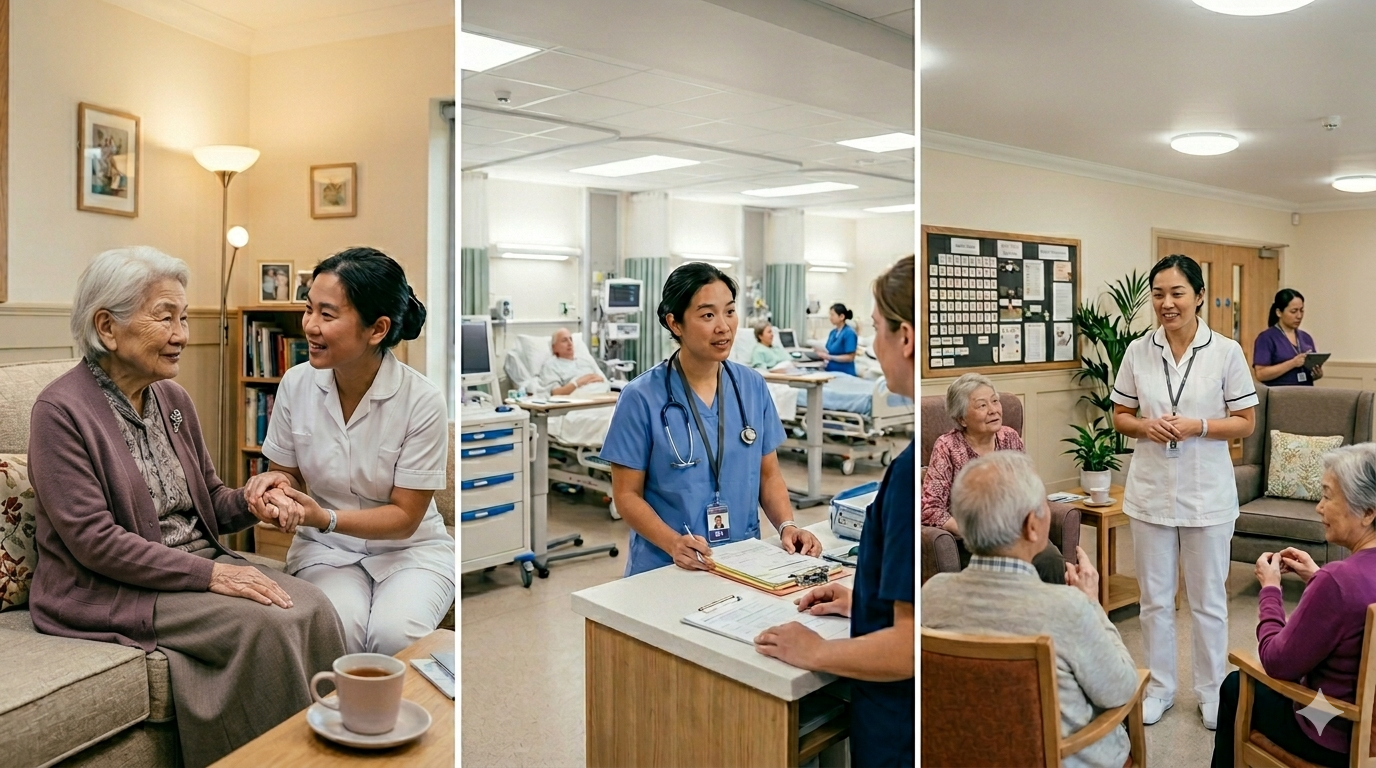
A caregiver or kaigo worker is a worker who is tasked with assisting the elderly in carrying out their daily activities. This profession is one of the most in-demand jobs in Japan today.
The duties of a caregiver include:
- Helping the elderly bathe and maintain personal hygiene
- Assisting with eating and drinking
- Helping the elderly get dressed
- Assisting with mobility, such as transferring from bed to wheelchair
- Assisting with social activities and rehabilitation activities
Caregiver work is generally carried out in various facilities such as nursing homes, elderly rehabilitation centers and elderly day care facilities.
2. Nursing Home Staff
In addition to caregivers, there are also nursing home staff jobs in Japanese elderly care facilities. The duties of a nursing home worker are similar to those of a caregiver, but they usually work in a larger elderly care team.
Some of their duties include:
- Assisting with daily activities of the elderly
- Accompanying the social activities of the residents of the facility
- Monitoring basic health conditions such as blood pressure, body temperature, and physical condition of the elderly
This profession is in high demand as the number of elderly people in Japan is increasing every year.
3. Hospital Nurse
Another type of job is a hospital nurse in Japan who works directly in a hospital environment.
The duties of a nurse in Japan include:
- Providing medical care to patients
- Monitoring the patient's health condition
- Managing the administration of drugs and medical therapies
- Recording the patient's health progress on a regular basis
However, to work as a hospital nurse in Japan, one must have a Japanese nurse's license. Therefore, the requirements are much higher compared to caregiver jobs.
Requirements for Caregiver and Nurse Jobs in Japan
The requirements to work in the Japanese care sector vary depending on the job position and the program one is enrolled in. But in general, here are some of the main requirements to work as a caregiver through Japan's SSW program.
- Minimum high school education or equivalent
- Pass the Nursing Care Skill Evaluation Test
- Have Japanese language skills at least N4 level
- Physically and mentally healthy
- Pass the selection process of Japanese companies
Japan's SSW caregiver program is one of the most popular pathways for Indonesians who want to work in the elderly care sector.
Requirements to Become a Hospital Nurse in Japan
Meanwhile, to work as a hospital nurse in Japan, the requirements are higher, namely:
- D3, D4 or S1 Nursing graduates
- Have an active registration certificate (STR)
- Proficiency in Japanese at least level N3 or N2
- Pass the Japanese national nurse license exam (Kangoshi).
Due to the lengthy process, many Indonesian workers start their careers as caregivers in Japan before moving on to higher levels as professional nurses.
Caregiver and nursing job opportunities in Japan for Indonesians are increasingly wide open. With good preparation, prospective Indonesian workers have a great chance to succeed and build an international career in Japan.
.png?width=193&height=84&name=Logo%20GSC%20(SEA).png)
.png)